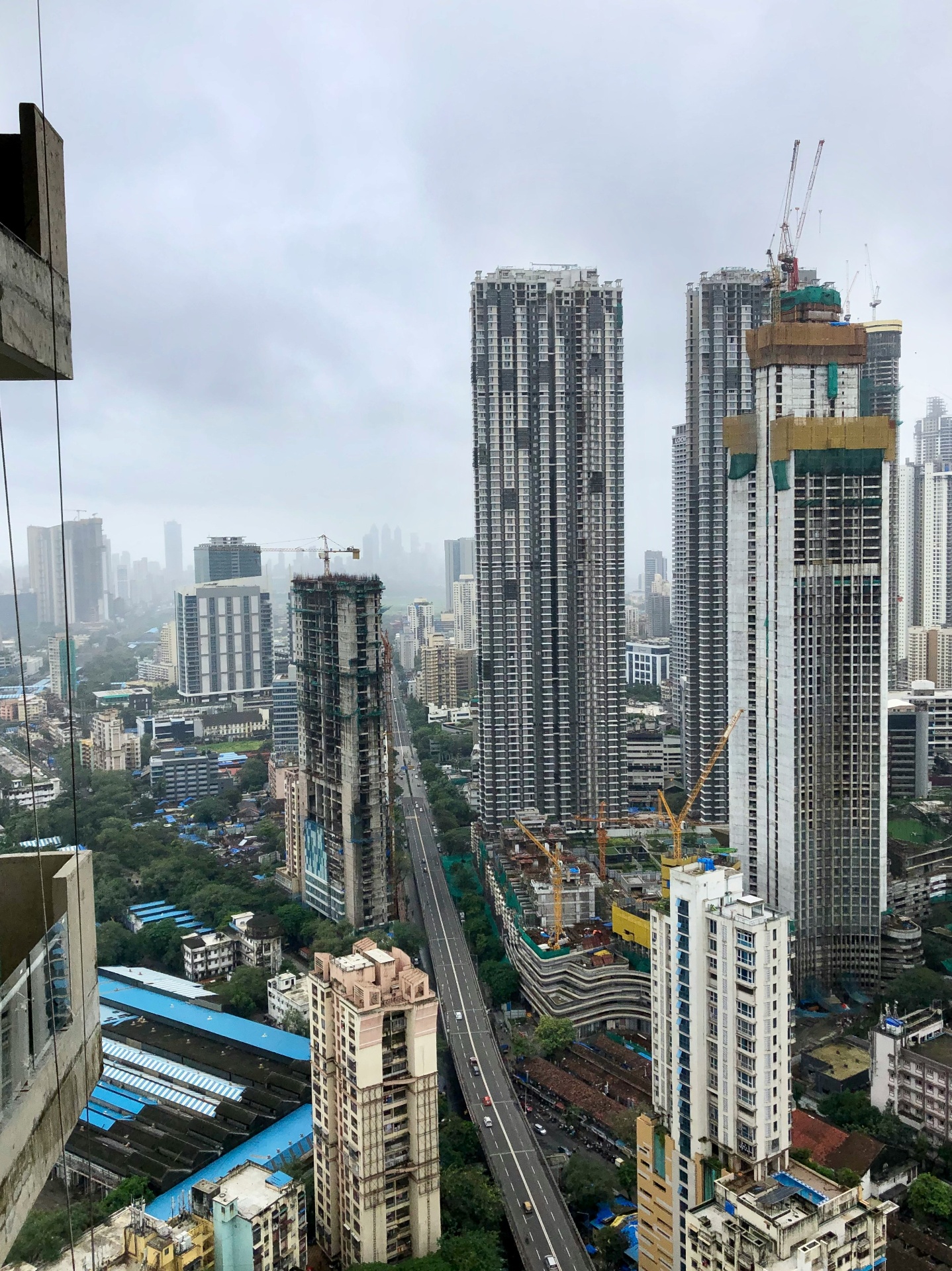

India is urbanizing at extraordinary speed. Across Mumbai, Bengaluru, Hyderabad, Delhi NCR, Pune, Ahmedabad, and Chennai, skylines continue to rise with remarkable intensity. Towers replace low-rise housing. Redevelopment accelerates across aging neighborhoods. Infrastructure corridors reshape metropolitan boundaries. New capital flows aggressively into real estate development.
To many, this appears to represent progress.
But urban planners increasingly warn that India's cities are not merely expanding — they are densifying faster than their civic systems are evolving.
The distinction is critical.
Density by itself is not a problem. In fact, some of the world's most successful cities — Singapore, Tokyo, Hong Kong, and New York — operate at extremely high urban densities. The difference is that density in those cities evolved alongside transportation systems, utility networks, public infrastructure, drainage systems, emergency access planning, and long-term urban coordination.
In India, however, development often advances faster than infrastructure adaptation.
The consequences are already visible: overloaded roads, stressed drainage systems, water shortages, parking crises, shrinking open spaces, heat accumulation, and increasing strain on urban mobility.
"Cities are not merely collections of buildings. They are operational systems."
Mumbai offers perhaps the clearest example of this contradiction. Redevelopment projects continue to increase housing density across several urban pockets, yet many surrounding civic systems remain fundamentally constrained by legacy infrastructure. Even road width directly influences redevelopment feasibility, fire approvals, and building eligibility under DCPR regulations.
In several cases, cities are effectively attempting to introduce future population densities into infrastructure systems designed decades earlier.
This creates a form of urban compression: more people, more vehicles, more verticality — but not always proportionate civic expansion.
A measurement problem.
The issue is not anti-development sentiment. India urgently requires new housing stock, modernized buildings, and urban renewal. Large sections of metropolitan India consist of aging and unsafe structures that cannot sustainably support future populations.
The concern is that urban growth is increasingly being measured through construction output rather than urban functionality.
This distinction matters because cities are not merely collections of buildings. They are operational systems.
A residential tower is not independent from drainage capacity, electrical infrastructure, evacuation access, transport systems, water pressure, emergency response, waste management, or social infrastructure. When urban planning fails to integrate these systems cohesively, vertical growth can begin to outpace urban livability itself.
Several reports on India's housing landscape continue to highlight the imbalance between rapid urban demand and insufficient infrastructure adaptation. Affordable housing shortages, financing stress, regulatory delays, and uneven planning frameworks continue to complicate urban expansion nationwide.
Simultaneously, premium real estate has increasingly dominated market momentum across major cities. Industry data suggests that higher-ticket housing segments continue capturing significant portions of market value, while affordability gaps persist for large sections of the urban population.
This creates another emerging contradiction: cities become denser and more expensive simultaneously. As a result, urban development risks becoming increasingly unequal — high-density vertical expansion without proportionate accessibility.
Urban theorists often argue that the true test of a city is not how fast it can build, but how intelligently it can absorb growth. India is now approaching precisely that test.
The coming decade will likely determine whether Indian cities evolve into integrated metropolitan systems, or fragmented vertical clusters operating under increasing infrastructural stress.
The answer may depend less on how many towers are approved and more on whether urban planning begins treating infrastructure, mobility, environment, and density as interconnected systems rather than separate administrative departments.
Because eventually, every city reveals the philosophy through which it was built. And increasingly, India's cities are asking whether growth alone is enough.