
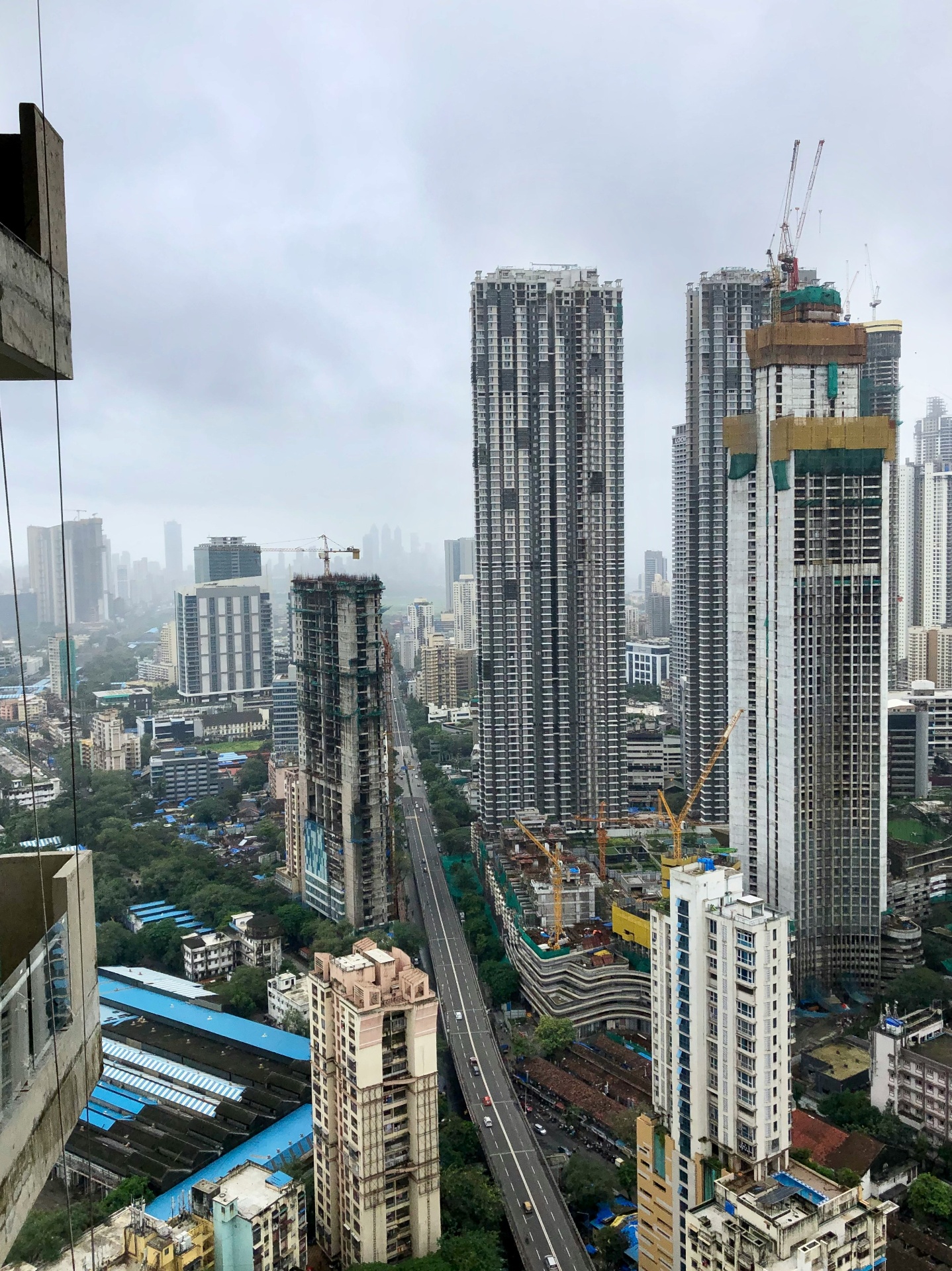
India's urban redevelopment story is often presented as a triumph of growth. Across Mumbai, Ahmedabad, Delhi NCR, and other metropolitan regions, old housing stock is being replaced with taller towers, higher Floor Space Index (FSI), and denser urban clusters. Cranes dominate skylines, redevelopment agreements multiply, and policymakers increasingly frame urban construction as an engine of economic expansion.
Yet beneath this outward momentum lies a growing structural problem: India's redevelopment framework is becoming progressively more restrictive, financially fragile, and operationally unsustainable.
The issue is no longer merely about approvals. It is about the very model through which Indian cities are attempting to redevelop themselves.
Mumbai represents the clearest example.
Under the Development Control and Promotion Regulations (DCPR) 2034, redevelopment projects are governed through an extraordinarily layered system of FSI calculations, rehabilitation obligations, open space requirements, environmental clearances, fire regulations, infrastructure reservations, road width conditions, premium calculations, and multiple departmental approvals. While these regulations were designed to bring planning discipline and urban order, the practical reality has often become one of procedural paralysis.
Industry professionals increasingly argue that redevelopment feasibility is no longer determined primarily by design quality or construction capability, but by the ability to navigate regulatory interpretation itself.
In many projects, approval timelines extend across several years. Reports and policy discussions surrounding Mumbai redevelopment have repeatedly pointed toward prolonged approval cycles, delayed sanctions, and the financial burden imposed by fragmented permissions.
"This has created a dangerous imbalance within the development ecosystem."
Construction costs across India have continued to rise sharply due to material inflation, financing pressures, and labor instability. In Gujarat, redevelopment negotiations have reportedly stalled in numerous societies because steel, cement, aluminum, and PVC price increases rendered earlier project assumptions financially unviable.
Simultaneously, affordable housing supply continues to lag demand across India's urban centers. Knight Frank's recent affordable housing report noted that high land costs, expensive construction finance, regulatory hurdles, and insufficient incentives for developers continue to suppress housing supply despite rising urban demand.
The contradiction is becoming increasingly visible: cities require redevelopment urgently, yet the systems governing redevelopment often make execution economically unstable.
Aging stock, shrinking margins.
This tension is especially visible in Mumbai's aging housing stock. Large portions of the city consist of old cooperative societies, chawls, cessed buildings, and structurally aging developments requiring modernization. Yet many projects remain delayed because redevelopment today operates within an environment where every additional regulation introduces another layer of financial compression.
Developers face rising obligations while simultaneously operating under shrinking margins and prolonged timelines.
As a result, redevelopment increasingly favors only ultra-prime locations, very high-sale-value projects, or developers with exceptionally large balance sheets. Smaller and mid-sized developers are gradually being pushed out of feasibility altogether.
The result is a paradoxical urban condition: the cities most urgently requiring redevelopment are often the least operationally capable of enabling it efficiently.
At the same time, the public perception of redevelopment has also deteriorated. High-profile failures, delayed possession cases, and redevelopment controversies have created growing distrust between societies and developers. Cases such as the Patra Chawl redevelopment scandal significantly damaged public confidence by exposing how redevelopment structures can become vulnerable to financial misuse and stalled execution.
This has intensified legal caution, bureaucratic scrutiny, and institutional hesitation — further slowing redevelopment pipelines.
None of this suggests that regulation itself is unnecessary. Indian cities unquestionably require planning discipline, environmental safeguards, fire safety systems, and anti-exploitation mechanisms. However, the emerging criticism is that Indian urban policy increasingly regulates development as though every project is a risk to be controlled rather than infrastructure necessary to urban survival.
That distinction matters enormously. Because cities do not stagnate gradually — they stagnate structurally.
India's urban population continues to rise. Housing shortages remain significant. Construction remains a major economic multiplier. The India residential construction market is projected to expand substantially over the coming years, supported by urbanization and infrastructure growth.
Yet unless redevelopment frameworks become operationally faster, more predictable, and financially realistic, the risk is that cities may experience a future defined not by organized transformation, but by selective redevelopment concentrated only where speculative economics remain viable.
"How much friction can a city absorb before development itself becomes structurally constrained?"
The deeper question therefore is no longer 'How much FSI can a city permit?' It is: 'How much friction can a city absorb before development itself becomes structurally constrained?'
India's redevelopment future may ultimately depend on how that question is answered.